

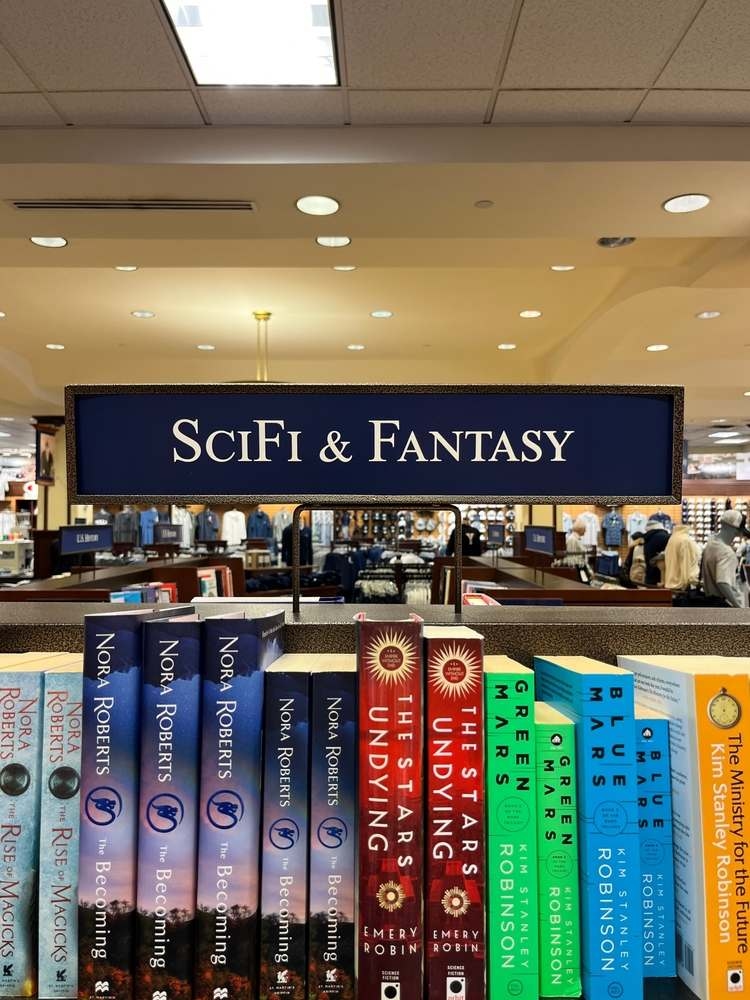
Fantasy vs. science fiction may seem like a simple comparison, but the line isn't always drawn as cleanly as we'd like. Both science fiction and fantasy push the reader into worlds that are larger and "what if?" scenarios beyond real life.
The main difference is typically in how an extraordinary idea is explained. Science fiction usually involves science and technology, while the fantasy genre involves magic, myth, or the supernatural.
Here's a quick way to distinguish between fantasy and science fiction. Why is it possible? Fiction that falls into the science-fiction genre usually establishes a link between bizarre happenings and science, technology, or a potential future. The concepts might be way out there, but most work within the framework of established scientific or technological principles.
Fantasy is different. It can have magic, dragons, superpowers, mythical beings, a curse, the gods, or an enchanted item, without any need to explain the science behind it. The author creates the mechanics of the world and then adheres to them.
The defining feature of what makes a story science fiction or fantasy is the essence of the story, not just one element. A story about a spaceship is not necessarily science fiction, nor is a story about a strange creature necessarily fantasy. The bizarre items over the facts are more important:
Science Fiction: Artificial intelligence, robotics, space travel, genetic engineering, advanced medicine, time travel, and "futuristic" technology.
Fantasy: Magic systems, mythical beasts, supernatural power, spells, magical beings, deities, curses, and magical worlds.
Science Fantasy: a fusion of science fiction and fantasy elements, such as magic and supernaturalism.
And this is the answer to why the science fiction vs. fantasy battle can make more sense: you can pinch or borrow bits and pieces of the two from one another, and a story will still maintain an identity of its own.
Science and magic are often the most obvious distinctions in science fiction vs. fantasy. Sci-fi usually comes back to “what can happen if science or technology advances in some way.” Even in speculative cases, sci-fi stories usually explain how their technology functions.
There is no reason to attach the unusual elements of your fantasy to real science. Magic is, after all, part of the world. But it will be helpful to have rules in the fantasy world. If a character can do something, there should be limitations, and those limitations should be relevant.
What are the different science fiction genres? Hard science fiction prioritizes scientific data and its application, while space science fiction delves into alien worlds and lifeforms. Dystopian science fiction presents bleak societies driven by technology or oppressive governments, while military science fiction concentrates on warfare and technology.
There are different kinds of fantasy: High fantasy is usually set in a new world of its own, with its own cultures and magic. Urban fantasy features supernatural elements in present-day society, and dark fantasy may mix fantasy elements with more sinister ones. But even this doesn't mean that a genre has only one kind of story.
Here's why fantasy and science fiction are two separate genres, even though both are based on a fictional concept. What makes the genres different is the nature of the possibility.
Science fiction might explore what the world would be like if humans built machines that think for themselves, if we venture to the stars, or if science advances to the point of changing the human body. Fantasy might explore what the world would be like if magical beings joined us on Earth or if entire worlds or dimensions could be accessed through enchantments.
Themes can still overlap. Both can address questions of power, identity, morality, freedom, survival, social change, and relationships. The main difference is the way those questions are addressed through the genres' structure.
In what way are fantasy and science fiction alike? They are both speculative fiction because they presuppose worlds quite different from everyday life. The writers have an opportunity to look at human existence from a different point of view.
However, both types of writing also rely heavily on world-building. Writers of sci-fi and fantasy have to teach their readers what is and isn't possible—just as writers of science fiction have to explain how their imaginary technology works. As long as they stay consistent, they can even be bizarre.
Yes. There are stories that intentionally try to weave both. These stories are labelled as science fantasy because they merge magic or supernatural phenomena with near-future or scientific ideas.
A story set on an alien planet might include spaceship battles, computer control, and sci-fi guns and then also incorporate mystical forces as well. The synthesis can succeed if both aspects are carefully contrived within the same fictional universe.
That overlap explains why fantasy vs. science fiction is never always a hard choice. Some stories allow the use of conventions from both genres without requiring the story to conform to either.
Speculative fiction covers the larger umbrella that includes fantasy, science fiction, dystopian fiction, alternate histories, and anything else under the sun that explores the possibilities of things other than reality.
Speculative fiction is also good for stories that are genre-breaking. A writer could take a science-based idea and add magic; the writer could set a story in a fantasy land and explore issues related to technology and progress. The story might borrow from more than one genre without heading off-topic.
Knowing the distinction may also help readers know what to expect. A reader attracted to technology, outer space, artificial intelligence, and potential futures might gravitate toward science fiction. A reader who is interested in magic, Greek gods, superpowers, and imaginary lands may incline toward fantasy.
The difference can provide writers with some direction when creating worlds and stories. If the core idea of the story is based in science or technology, then maybe it's science fiction. If the core idea is based in magic or the supernatural, then maybe it's fantasy. Those stories can also be a hybrid of both.
The major difference between fantasy and science fiction is that science fiction creates its main ideas on science, technology, and potential scenarios, whereas fantasy uses magic, mythology, and supernatural forces.
The science fiction vs. fantasy separation gets looser when you include mixes of the two approaches. Fantasy and sci-fi often have identical themes, characters, world-building, and emotional conflicts, with the single difference being the rationalization of their fantasy or sci-fi worlds. Whether in the fantasy genre, a particular sci-fi genre, or a broader aspect of all speculative fiction, solid rules and compelling stories matter.
No. Fantasy isn't restricted to new worlds, though—it can occur in existing settings as well. Urban fantasy, for instance, introduces elements of magic and the supernatural to an otherwise real world, where the magical can coexist with the mundane.
No. Science fiction spans the spectrum from heavily researched stories based in scientific fact to ideas that are realms away from any current technology. The various styles of science fiction ascribe different importance to the science in their stories, but the central ideas need to have rules that make sense.
The use of aliens in science fiction is a natural leap, as they're very good representations of space travel and the idea of life on other planets. But they can also be used in fantasy stories, even when the stories contain elements of magic.
Sort of. Quite a few stories are a mash-up of conventions from multiple genres. A lone story could feature future tech, magic, supernatural elements, and even a dystopia. Genres are often about the general feel of a story rather than every aspect.
Both genres provide new ways to make sense of everyday human life. Fantasy can evoke awe and astonishment through magic and myth, and SF through new worlds, new places, possible futures, and the prospects of technological change. Both can be memorable worlds, bizarre conflicts, and profound questions.
This content was created by AI